Trends Popular Progressions
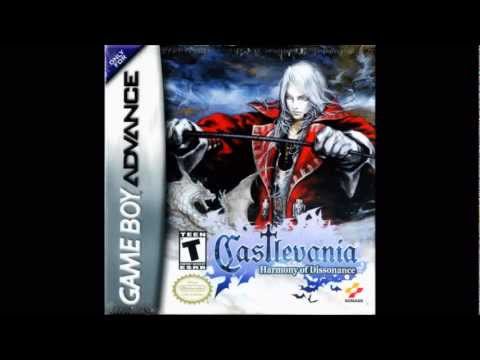
TheoryTab / Soshiro Hokkai / Castlevania HoD - Chapel of Dissonance
Castlevania HoD - Chapel of Dissonance
Song Analysis

Castlevania HoD - Chapel of Dissonance Chords and Melody

Castlevania HoD - Chapel of Dissonance
Castlevania HoD - Chapel of Dissonance – Instrumental

Related Music Concepts

Inverted Chords
Using a different bass note to change a chord's sound
Extended Chords
Stacking thirds beyond the 7th to create more complex sounds
Seventh Chords
Adding one more note to the basic chords
Secondary Chords
Chords that temporarily shift the harmonic center
Non-Standard Mode
New scales and home base chords for a different mood
Borrowed Chords
Using chords from parallel modes for contrast and emotion
Song Stats Instrumental
Tempo 160 BPM
Melody Range G3 – G6
Mood Upbeat
Most Used Chord IV
Song Stats All Sections
Tempo 160 BPM
Melody Range G3 – G6
Mood Upbeat
Most Used Chord IV

About Castlevania HoD - Chapel of Dissonance

About the Chord Progressions

Section Progression Songs with this progression
Instrumental
i9 IV7
Apache - Jump On It by Sugarhill Gang
Down By The River by Neil Young
You Spin Me Round (Like a Record) by Dead Or Alive
Mad World by Gary Jules
Minuet of Forest by The Legend of Zelda
Open Space by Arty
My Sharona by The Knack
880 songs →

About the Melody

Melody data is compiled from all analyzed melody sections, so depending on how a user analyzed a song, "melody" might include instrumental notes.

𝄞
G3 – G6
Melody range across 36 semitones
0.71 beats/note
Across 144.3 beats of melody
Stepwise Motion
Jumpiness
Repeaty
96% Diatonic
Percentage of notes within the song's key.
73% Chord Tones
Percentage of notes that fall on a chord tone of the underlying harmony.
Mixed Consonance
How smoothly the melody blends with the harmony (0 = dissonant, 1 = consonant).
Loose Syncopation
How often the melody emphasizes off-beats. Higher = more syncopated.

Metrics Radar Chart

Metrics data is not available for this song.

BPM Comparison

Melody Distribution

1
2
3
4
5
6
7

Melodic Intervals

Distribution of note-to-note jumps in semitones (negative = downward, positive = upward)

Note Durations

How long each note is held (in beats)

Syncopation

How many notes fall on each level of metric strength (0 = on-beat, higher = increasingly off-beat)

Level 0
Notes that fall on the downbeat — the strongest metric position in the measure.
Level 1
Notes on a secondary strong beat (e.g. beat 3 in 4/4) — still firmly on the grid.
Level 2
Notes on the remaining primary beats (2 and 4 in 4/4) — moderate metric weight.
Level 3
Notes on eighth-note offbeats — between the primary beats. Audibly syncopated.
Created and Maintained by You

TheoryTab is the world's largest collection of songs analyzed by their underlying chord progressions and melodies. Every tab is crowd-sourced and community-maintained — contributed by musicians like you who want to help others understand how music works.

Unlike traditional tabs or sheet music, TheoryTabs reveal the function of each chord and note, making it easy to see patterns, compare songs, and discover what makes your favorite music tick.

Become a Contributor
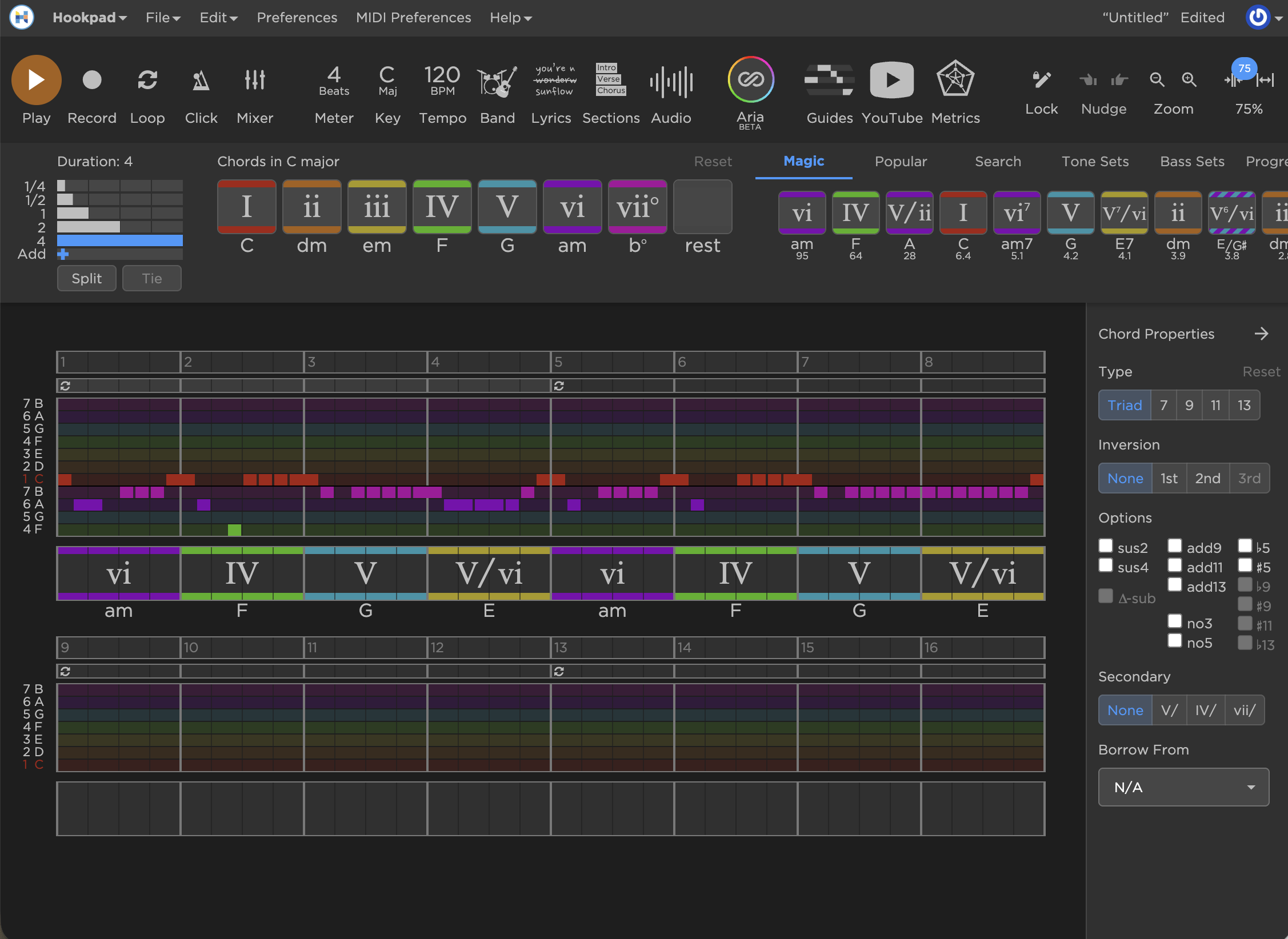
Hookpad screenshot

Made with Hookpad

Hookpad is an intelligent music sketchpad that helps you write amazing chord progressions and melodies. It uses the tools of music theory to help you find the sounds you're looking for.

Frequently Asked
Questions

Everything you need to know about TheoryTab.

TheoryTab is the world's largest database of songs analyzed by their chord progressions and melodies. Each entry breaks a song into its harmonic and melodic components using relative notation, making it easy to see the music theory behind any song.
TheoryTabs are crowd-sourced and community-maintained. Musicians use Hookpad — our intelligent music sketchpad — to transcribe songs by ear, identifying the chords and melodies and entering them in a standardized format that anyone can read and learn from.
Roman numerals represent chords by their position in a key rather than by letter name. For example, in the key of C major, I = C, IV = F, V = G, and vi = Am. This relative notation makes it easy to compare chord progressions across songs in different keys. Click here to learn more about relative notation.
Yes! Anyone can contribute. Visit our Contributor Guide to learn how to use Hookpad to transcribe songs. Your contributions help musicians worldwide learn and understand music theory through real songs.

All of our TheoryTabs are contributed to our site by users like you! Every TheoryTab can be revised at any time by any registered user. Each TheoryTab has a full version history similar to Wikipedia.

To edit a TheoryTab, follow this guide.

Please note: Hooktheory is a collaborative, community-driven project, and maintaining quality and respectful contributions is essential. Users may be flagged if they:

  • Consistently submit inaccurate, misleading, or intentionally incorrect TheoryTabs.
  • Delete or overwrite good work from other contributors without reason.
  • Use offensive, inappropriate, or spammy content in their submissions.
  • Repeatedly ignore transcription guidelines or community feedback.
Relative notation describes chords and notes by their function within a key, rather than by their absolute pitch. This means a I–V–vi–IV progression is the same pattern whether the song is in C major, G major, or any other key — making it much easier to recognize common patterns across songs.