Stable/Unstable Scale Degree
A scale degree or note can be either stable or unstable, depending on the chord being played at the time. Stable scale degrees are notes that are part of the current chord — they reinforce the harmony and create a sense of consonance and rest. For example, a I chord contains scale degrees 1, 3, and 5:
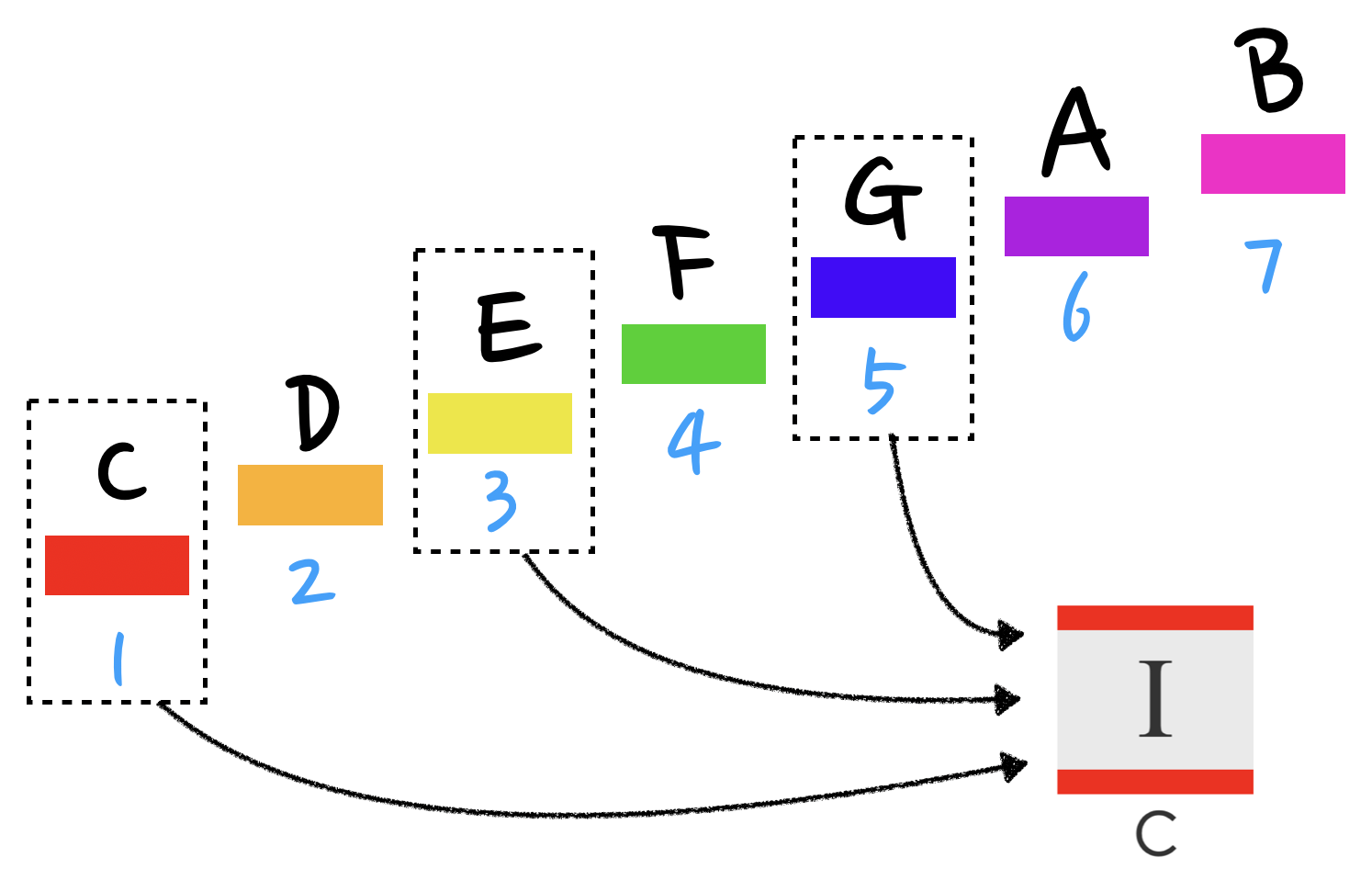
When a melody is played over a I chord, scale degrees 1, 3, and 5 are considered stable. In contrast, unstable scale degrees are notes that do not belong to the current chord. These introduce tension and often seek resolution to a stable note within the phrase.
The contrast between stable and unstable notes is essential for writing expressive melodies. Unstable notes that appear on weaker beats (see meter) are generally less tense, while those that fall on strong beats create more tension and often (but not always) resolve to a stable tone.
In Hookpad and the TheoryTab database, stable scale degrees can be visualized directly on the staff using the Guides toggle. These highlight which notes in a melody match the current chord:
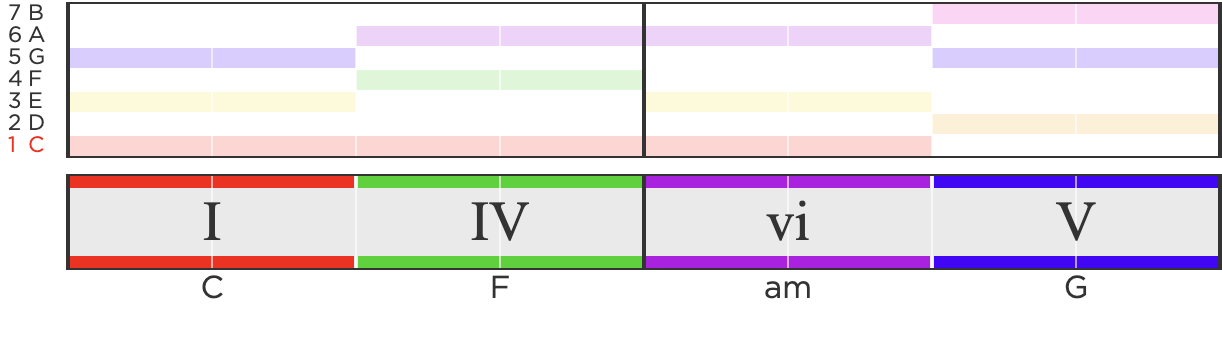
Below are two examples of melodies. The first leans heavily on unstable tones, creating more tension. The second stays mostly within the stable notes of each chord. In both examples, the stable guides are shown above the staff to help visualize what’s happening:

The tension created by unstable scale degrees is one of the key song metrics tracked in the TheoryTab database. You can read about these metrics here.